0
Shares
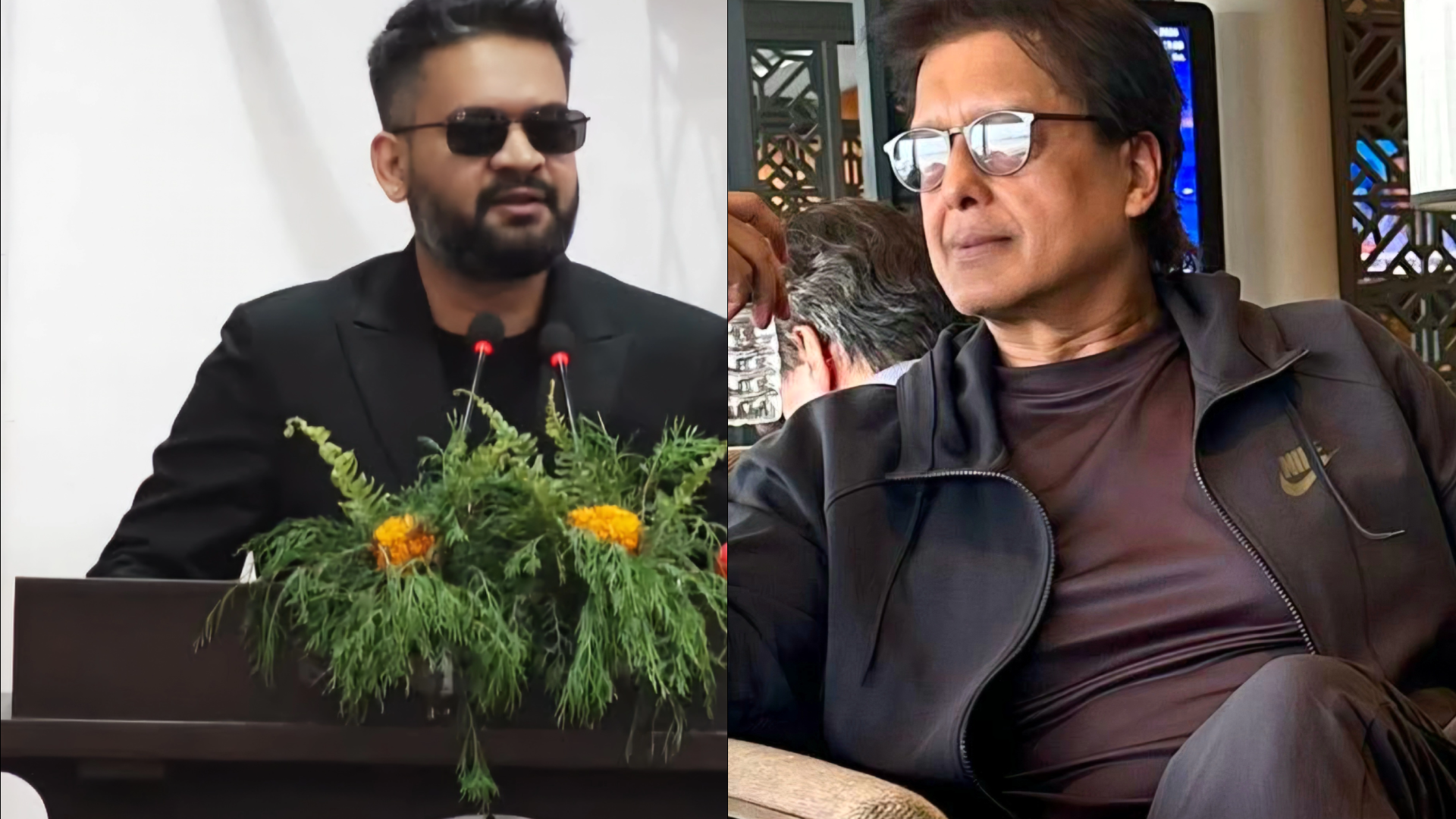



Nepal’s superstar Rajesh Hamal has published a detailed commentary on border-related debates, highlighting the distinction between “cross-border encroachment” and “state-sponsored territorial encroachment.”
According to his statement, incidents arising from open borders, local movement, natural changes, and long-standing social ties should be understood differently from strategic territorial expansion. He further explains that encroachment involving direct state institutions represents an entirely different category of political issue.
His statement in full:
“Nepal’s Border…..
In discussions about Nepal’s borders, two terms are often used—Cross-Border Encroachment and State-Sponsored Territorial Encroachment. These are often understood as the same, but in reality they are fundamentally different in nature.
Cross-border encroachment is more related to local citizens than to governments. Due to the open Nepal–India border, people of both countries have been connected for centuries through trade, agriculture, and social relations. Rivers change course, boundary pillars are lost or damaged, and settlements expand.
These incidents are generally not policy-driven but are the result of geographical proximity and historical circumstances. They are more administrative and local in nature rather than strategic expansion efforts, and can be resolved through dialogue, joint surveys, and mutual cooperation.
However, the nature of state-sponsored territorial encroachment is completely different.
It occurs when a state itself actively expands or maintains control over a disputed territory. Here, it is not individuals but state institutions that are involved. Roads are constructed, administrative structures are established, security forces are deployed, official maps are revised, and state authority is formally exercised.
The most prominent example of this is the Kalapani–Lipulekh–Limpiyadhura region.
In today’s turbulent and uncertain global political environment, if the leadership of a nation lacks maturity, experience, decision-making ability, and vision, the country may face serious challenges.”