0
Shares




‘Dopamine’ Story Collection Explores Hidden Mental Struggles of Modern Life
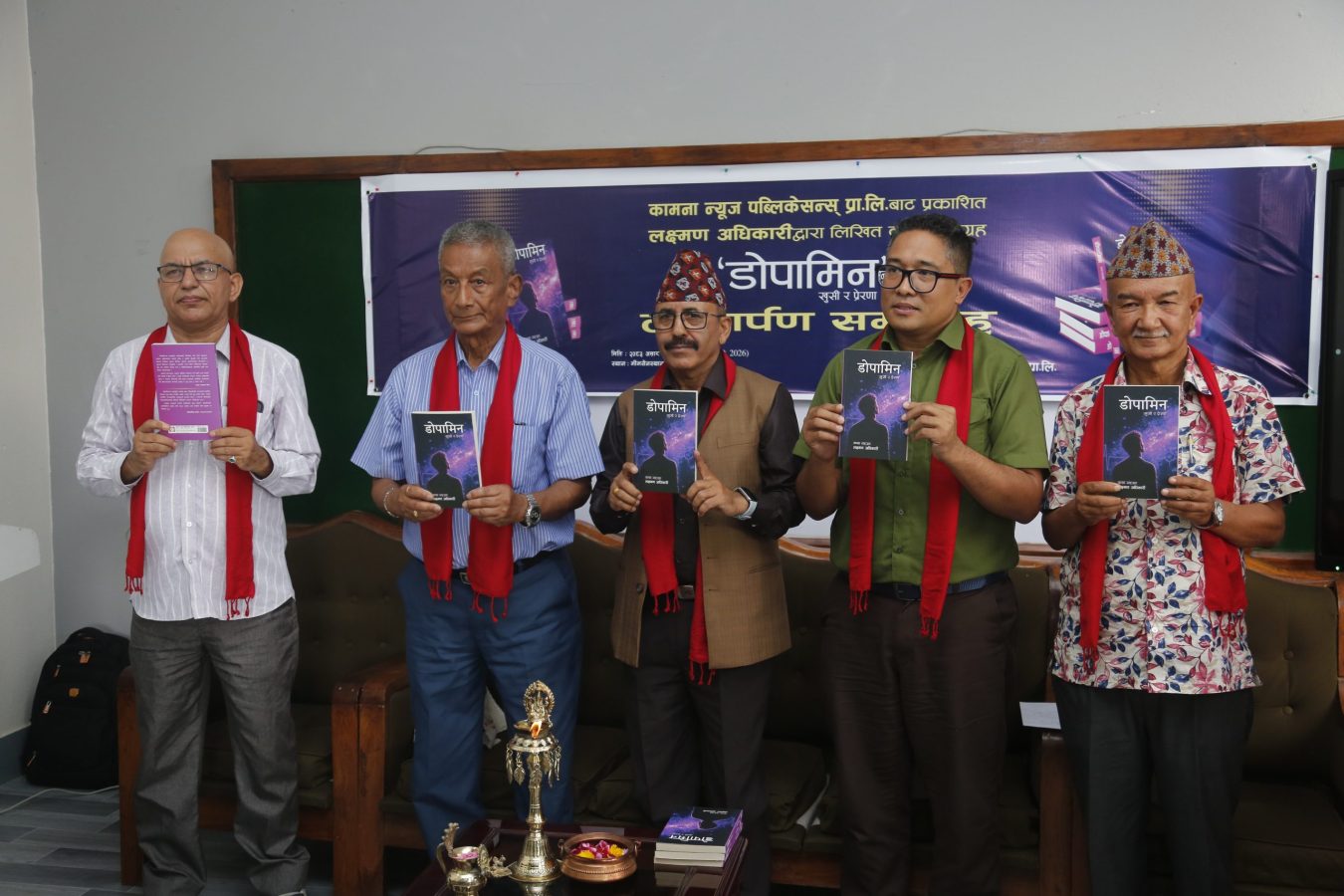
A new short story collection, “Dopamine: Happiness and Inspiration,” by senior journalist and author Laxman Adhikari was launched on Monday, offering a powerful literary exploration of the hidden psychological struggles faced by people in modern society.
Unveiled at the premises of Kamana News Publications, the collection features 18 stories that examine mental and physical health, human emotions, social discrimination, love, justice, healthcare and the challenges of everyday life through a psychological lens. The book focuses on individuals who appear normal on the outside while silently carrying profound emotional pain within.
Reviewing the book, literary critic Prof. Dr. Dayaram Shrestha described “Dopamine” as a remarkable blend of psychology and storytelling in contemporary Nepali literature. He said the stories demonstrate literary honesty, narrative beauty and mature craftsmanship while effectively portraying the complexities of the human mind and the conflicts it creates.
According to Shrestha, the collection explores themes including inferiority complex, the hidden truths behind suicide, psychological distress, inner conflict, escapism, frustration and sexual abuse, making it more than just a collection of stories. He said the book invites readers on a journey into their own minds.
Senior journalist and fiction writer Shriram Singh Basnet said the collection is firmly grounded in reality rather than imagination alone, describing it as a work that is not only engaging to read but also deeply thought-provoking.
Kapil Kafle, President of the Nepal Press Institute, recalled Adhikari’s previous work “Morphine,” which examined the quieter side of pain. He said “Dopamine” shifts the focus toward hope, motivation and the invisible chemical processes of the human brain, presenting them through compelling narratives.
Author Laxman Adhikari said the stories revolve around characters burdened by psychological wounds that often run deeper than physical illness. He explained that the book combines literary imagination with scientifically grounded information while exploring the hidden desires and emotional pain carried by its characters. He added that the title was inspired by dopamine—the hormone associated with happiness—reflecting his belief that literature can also bring hope and joy.
Direk Lal Shrestha, Chairman of Kamana News Publications, expressed confidence that the collection would become an important contribution to Nepali fiction. He praised Adhikari’s discipline, professionalism and dedication, saying the book serves as a mirror reflecting loneliness, relationships, aspirations, suffering and the emotional realities of modern society.
Bhagwati Timilsina, President of the Nepal Journalists’ Federation Kamana Foundation Chapter, said the book elevates the ongoing public discourse on mental health by addressing it through literature.
Stories including “Refer Nahunda,” “Pashchatapko Aago,” “Ek Aaropko Mulya,” “Changeriko Maya,” “Usko Thauma Baser,” “Sapana Sancheko Jun,” and “Na Suicide Na Honeymoon” vividly portray pain, injustice, compassion, love and psychological conflict from hospital beds to the streets of society.
By bringing together healthcare, psychology and literature within a single narrative framework, “Dopamine: Happiness and Inspiration” is expected to establish a distinctive place in contemporary Nepali fiction while encouraging greater awareness of mental health and human relationships.