0
Shares





The Nepali life is a migrant’s life. It is this very migratory nature that has taken Nepalis to every corner of the world. Nepalis living outside Nepal have always cherished Nepal as their fatherland in their hearts. Nepali language, culture, and values have kept their connection to Nepal alive. Nepalis scattered across the globe have endured various forms of hardship. Yet, amidst all these experiences, their affection for Nepal and Nepali identity remains strong.
Due to political reasons, Nar Pradhan (Mitra) left Bhutan with his family and came to Nepal. Seventeen years ago, he left Nepal and moved to the United States. He had arrived in Nepal at the age of ten and a half. He spent the next sixteen to seventeen years in Nepal—completing all his education and growing up there. In Bhutan, his entire village was Nepali; the customs and culture were all Nepali. After coming to Nepal, that bond deepened even further. However, upon reaching America, the busyness of life created a sense of distance from that connection. That distance awakened a hunger within him to preserve the Nepali language, art, and culture. He kept thinking — “If we don’t preserve and teach this to future generations, our cultural heritage will be lost.”
Even while living abroad and facing hardships, he managed to keep that heritage alive. He believed that if it were to disappear, the spirits of our ancestors would not find peace, and future generations would never understand its value.
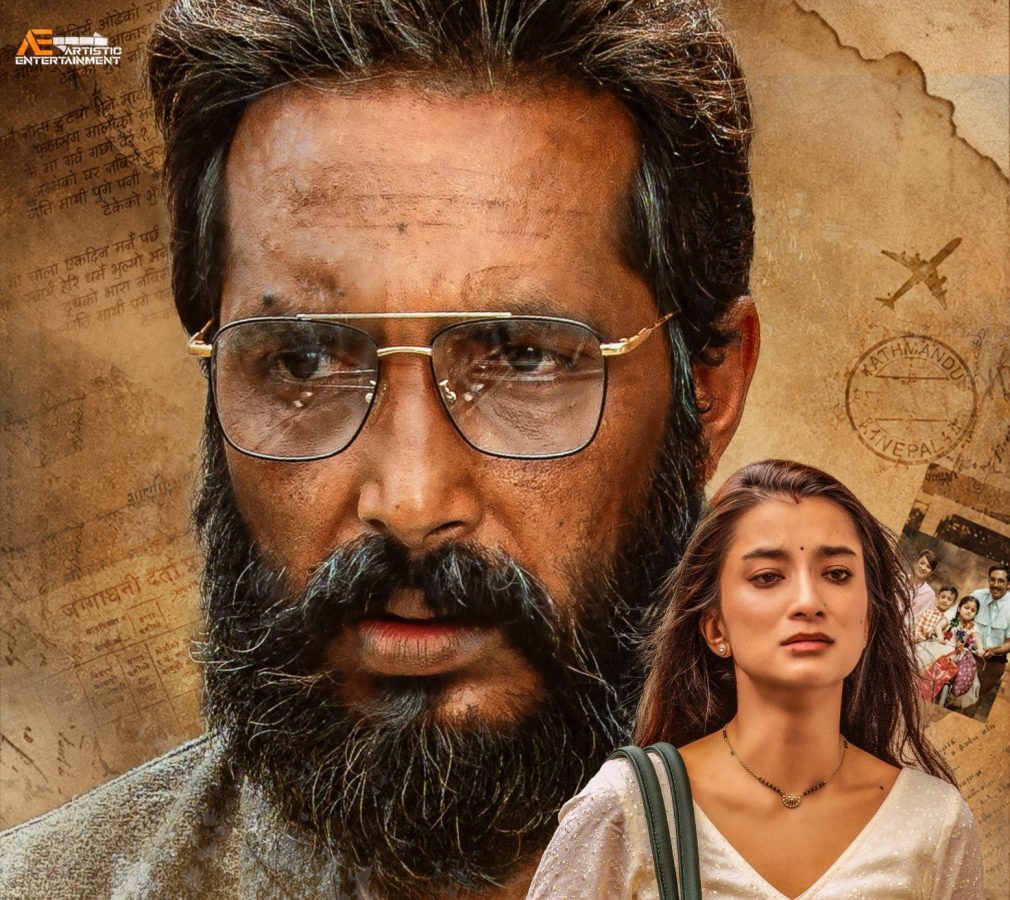
This very thought inspired him to write the story “Yo Man Ta Mero Nepali Ho” (This Heart of Mine is Nepali). That story has now taken the form of a film, set to release on Ashar 27 (Nepali calendar). He is also the director of the film. He says the film was made from the heart, with a sincere attempt to bring his thoughts to the screen.
The film has even been recognized by Nepal’s Curriculum Development Center as appropriate for school children, which has further encouraged him. Here is an excerpt from an interview with him:
What exactly is “Yo Man Ta Mero Nepali Ho”?
— It’s a campaign. A testament to the faith and belief of Nepalis who have traveled from Nepal to all parts of the world. Nepalis migrated in the past, and they continue to do so even now. With globalization, there’s a concern that Nepalis are becoming distanced from their language and culture—or worse, forgetting them. This film was made with the intent to pass on the legacy that our ancestors preserved to the next generation.
From the trailer, it seems to focus on the story of Nepalis expelled from Bhutan. Is that the central theme, or is it broader than that?
— The film does cover the story of Bhutanese Nepalis, but it’s not limited to that. In the past, Nepalis have migrated to Burma, India, Bhutan, and other countries. This film attempts to represent Nepalis living across the world. Bhutanese Nepalis have faced particularly painful experiences, which is why that narrative is highlighted.
Why did you write this story?
— When I reached America, I met people from many different countries and worked closely with them. I observed their customs and cultures up close. That made me realize that our own culture, identity, and traditions are equally rich. That’s why I wanted to create a film that would resonate with Nepalis—and hopefully, if possible, show it to non-Nepalis too. But first, the goal was to help us learn to love ourselves.
You’ve been living abroad for 17–18 years. What do you see that Nepalis are gradually leaving behind?
— Due to their busy lives abroad, people are unable to preserve their language, values, and culture—even if they want to. As a result, those aspects are slowly being forgotten. If we show these things visually, it can awaken the feeling that they must be preserved. I held four screenings in America, and I saw that many grandparents began teaching Nepali to their grandchildren afterward. Some even started running Nepali language classes. That shows this kind of film can have a real impact.
What do you hope to achieve from this film?
— If I had only looked at it from a commercial perspective, I might not have made this film. I chose this subject because I wanted to share a message. Many Nepalis have suffered while living abroad. When Nepalis in one country suffer, others elsewhere feel that pain too. We wish we could support each other emotionally. Today, because of social media, it has become easier to connect. If Nepalis across the world could unite like this, we could help build Nepal together. Nepal is a paradise — something you realize even more when you go abroad. Many of our parents living overseas suffer from various illnesses, but when they return to Nepal, nearly 70% of those illnesses seem to disappear. That’s the magic Nepal holds. That’s why we Nepalis must unite and be devoted to our country. Even if we live abroad, our Nepali heart must still feel compelled to act — and that is the message this film aims to deliver.
How much of what you originally envisioned made it into the film?
— Of course, not everything turned out exactly as I imagined. But I tried my best from my side. I’ve tried not to compromise where possible, though perfection is impossible. The reason I held four screenings in America was to get feedback on areas for improvement. Based on that, I’ve made changes where I could.
What does success or failure of this film mean to you?
— This is a film made from the heart. I didn’t create it based on calculations of success or failure. If I had, I would have chosen to invest in a commercial film. Whether the film earns money or not is in the hands of the audience. But for me and my team, this film is a gift to Nepalis everywhere—in Nepal, in Bhutan, and across the world.